


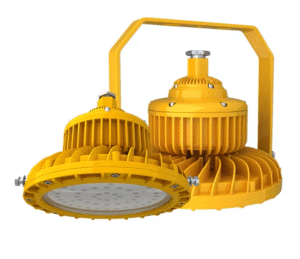
LED explosion-proof lights are heavy-duty fixtures, design for hazardous locations where flammable gases, vapors, or dusts are present, preventing ignition from occurring. Key details include: robust, non-sparking construction (often aluminum), shatterproof lenses (like tempered glass or PC), specific safety certifications (ATEX, UL) for different hazard levels (Classes and Zones), high-efficiency LED technology for energy saving and long life, and protective designs (IP66 or IP68) to keep out moisture, oil, and dust.
Key Features & Design
Durable, Non-Sparking Materials:Make Housing from cast aluminum or stainless steel, while lenses they make from tempered glass or resistant PC, designed to prevent sparks from igniting flammable materials.
Sealed Construction:The fixture is fully sealed and vapor-tight to keep out hazardous materials like vapors, gases, and fibers.
Heat Dissipation:Features specialized designs for heat dissipation, which helps maintain the LED’s lifespan and reduce the risk of producing sparks.
Waterproof & Dustproof:High Ingress Protection (IP) ratings such as IP66 or IP68, ensure the light is protected against water, oil, and dust.
Shock and Vibration Resistance:Built to withstand harsh industrial environments without compromising function.
Hazardous Location Classifications:
Designed for specific hazardous locations:Classes I, II, & III: Distinguish between flammable gases/vapors (Class I), combustible dusts (Class II), and easily ignitable fibers (Class III).Divisions 1 & 2: Further divide classes based on the likelihood of a hazardous atmosphere being present.Zones 0, 1, 2, 20, 21, & 22: Also used to categorize hazardous areas based on the presence and probability of an explosive atmosphere.
Performance & Benefits
-
Energy Efficiency:Significantly reduces energy consumption compared to older, traditional fixtures like HID lamps.
-
Long Lifespan:LEDs have extended lifespans, often exceeding 50,000 hours, which reduces maintenance costs.
-
Reduced Heat Emissions:Emits less heat, further reducing the risk of ignition in hazardous areas.
-
Eco-Friendly:Does not contain toxic substances like mercury or lead, making them an environmentally friendly choice.
Common Applications
- Oil refineries, gas stations, and petrochemical plants.
- Manufacturing plants, including machine tools (lathing, CNC).
- Power plants, railway, and shipbuilding industries.
- Any environment where flammable substances pose an ignition risk.
No comment