


LED emergency lighting provides reliable, battery-powered light during power outages, crucial for safe building evacuation. Key details include their power source (AC mains charging a built-in battery), LED light source for efficiency, and features like integrated pictograms, emergency escape signs, test functions, and status indicator LEDs. Battery life typically ranges from one to several hours, depending on the model and the number of LEDs in use.
Components and Features
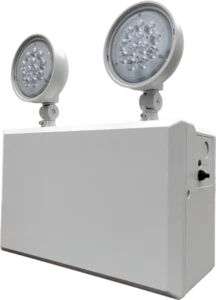
LED Light Source:Modern emergency lights use efficient LED bulbs for long-lasting, bright illumination.
Internal Battery:A built-in rechargeable battery provides power during a mains power failure.
Charging Indicator:An LED indicator light often shows when the battery is charging (typically red) or when the device has power (often green).
Status LEDs:Additional LEDs can indicate power status, battery charge, or other operational information.
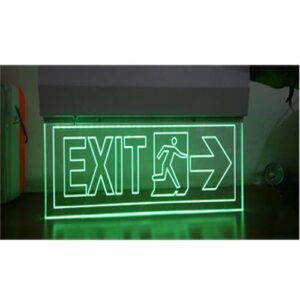
Pictograms/Signs:Units often include self-adhesive vinyl stickers with arrows (exit, left, right) to guide people to safety.
Test Function:A “push to test” button allows users to simulate a power failure and verify the battery and lamp are working correctly.
Technical Specifications
Power Input:Operates on standard AC mains voltage (e.g., 220-240V) to charge the battery.
Battery Types:Often feature Ni-Cd, Lithium-ion, or Lithium-polymer batteries for their longer life and good high-temperature tolerance.
Light Duration:Varies by model, with many providing 1 to 3 hours of operation during an emergency.
Brightness:Measured in lumens, which can range from under 100 to several hundred, depending on the model and usage.
Brightness Modes:Some units offer two-level brightness for longer runtime or higher visibility.
Applications
Building Evacuation:Essential for hallways, stairwells, and other escape routes to provide clear visibility to exits.
Signage:Used for illuminated exit and escape route signs to direct occupants safely out of a building.
Areas of Poor Visibility:Recommended for dark rooms, corridors, and areas where hazards might be present.
No comment